Author name: Digital Marketer

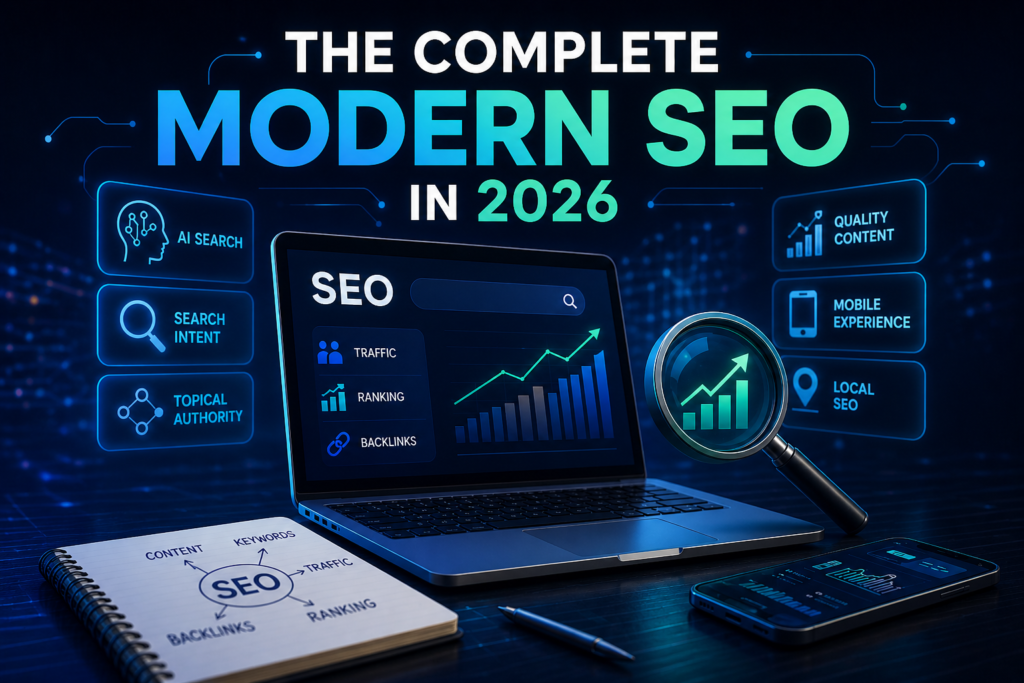
The Complete Modern SEO in 2026
Uncategorized

The Complete Modern SEO in 2026: What Actually Works Now

The Complete Modern SEO in 2026 The Complete Modern SEO in 2026 is transforming how businesses approach digital visibility and AI-driven search optimization. SEO in 2026 is no longer just about keywords, backlinks, and ranking #1 on Google. Search has evolved into a broader ecosystem powered by AI assistants, zero-click results, multimodal search, and advanced user-intent modeling. Businesses that still rely on SEO tactics from 2020–2023 are already falling behind. The Complete Modern SEO in 2026 requires adapting to AI-powered search experiences. In this guide, we’ll break down the complete modern SEO strategy for 2026 and explain what actually works in today’s search landscape. Table of Contents What Changed in SEO by 2026 AI Search Optimization (AISO) Search Intent Clustering Topical Authority & Knowledge Graphs Content Strategy for 2026 Technical SEO Essentials User Experience Signals Link Building in 2026 Video & Visual Search Optimization Local SEO Evolution SEO Tools for 2026 Future Trends 1. What Changed in SEO by 2026 Understanding The Complete Modern SEO in 2026 starts with recognizing how search engines evolved into intelligent answer systems. Search engines are no longer just search engines. They now function as AI-powered answer platforms, conversational assistants, and personalized recommendation systems. A major shift is the dominance of AI-generated answers in SERPs (Search Engine Results Pages). Users now frequently get answers without needing to click through to websites. Examples include Google AI Overviews, ChatGPT search integrations, Perplexity-style answer engines, and voice assistants. Zero-click search has become the norm, with over 70% of informational searches ending without a click. Because of this, SEO is no longer just about traffic acquisition. It now focuses more on visibility, brand mentions, citation authority, and conversion optimization. 2. AI Search Optimization (AISO) A major part of The Complete Modern SEO in 2026 is optimizing content for AI-generated search responses. A new discipline has emerged: AI Search Optimization (AISO). Instead of optimizing only to rank webpages, brands now optimize to be cited inside AI-generated answers. To succeed in AI search, content must be citation-friendly. This means including statistics, definitions, frameworks, and original insights. Content structure is equally important. AI models prefer clearly organized content with proper H2 and H3 headings, bullet points, FAQs, and concise paragraphs. Brands should also focus on building entity authority. AI engines understand entities better than keywords, so optimization should include brand entities, author profiles, organization schema, and founder information. 3. Search Intent Clustering The Complete Modern SEO in 2026 focuses heavily on intent-based content organization instead of isolated keywords. Keyword targeting alone is outdated. Modern SEO groups related keywords into intent clusters. For example, instead of separately targeting keywords like “best CRM,” “CRM software,” and “CRM tools,” businesses should build a single intent cluster containing comparison pages, alternatives pages, reviews, use cases, and pricing guides. Search engines increasingly reward intent coverage rather than isolated keyword pages. 4. Topical Authority & Semantic Depth Building authority is one of the core principles behind The Complete Modern SEO in 2026. Google now prioritizes topic experts instead of websites with isolated pages. Building topic clusters is essential. For example, a fitness website might have a pillar page called “Complete Guide to Weight Loss” supported by cluster pages covering calorie deficit, macros, cardio vs strength, meal plans, and fat loss myths. Internal linking should reinforce this hierarchy and help search engines understand relationships between pages. Semantic coverage is also critical. Instead of repeating the same keyword, content should include related entities. 5. Content Strategy for 2026 Content quality remains the foundation of The Complete Modern SEO in 2026. Google’s EEAT framework—Experience, Expertise, Authoritativeness, and Trustworthiness—matters more than ever. Strong content should include author bios, credentials, citations, case studies, and original research. Human-first content wins in 2026. AI-generated fluff is increasingly filtered out, while content with opinions, case studies, experiments, and unique frameworks performs better. High-performing content formats include original research, calculators, interactive tools, templates, video explainers, and community-driven content. 6. Technical SEO Essentials Technical performance is another critical component of The Complete Modern SEO in 2026. Technical SEO still plays a major role in rankings. Websites must ensure crawlability through clean architecture, XML sitemaps, and optimized robots.txt files. Indexability should be monitored carefully by fixing orphan pages, duplicate content, and canonical issues. Page speed remains important through Core Web Vitals, including Largest Contentful Paint (LCP), Interaction to Next Paint (INP), and Cumulative Layout Shift (CLS). Optimization methods include using CDNs, compressing images, and lazy loading. Structured data is now essential. Important schema types include Article, FAQ, HowTo, Product, Review, Organization, Person, and Breadcrumb. 7. UX Signals & Behavioral SEO User behavior analysis plays a major role in The Complete Modern SEO in 2026. Search engines increasingly use behavioral signals to infer user satisfaction. Important engagement signals include dwell time, pogo sticking, scroll depth, and interaction rates. Improving these signals requires fast-loading pages, clear design, readable formatting, and strong calls-to-action. 8. Link Building in 2026 Authority building strategies continue to shape The Complete Modern SEO in 2026. Backlinks still matter, but quality is now far more important than quantity. The best link-building strategies include digital PR campaigns that earn mentions from news publications, industry blogs, and podcasts. Linkable assets such as studies, reports, tools, and benchmarks also remain highly effective. Even unlinked brand mentions contribute to authority. Brand visibility now matters beyond traditional backlinks. 9. Video & Visual Search Optimization Multimodal search is becoming essential in The Complete Modern SEO in 2026. Search has become multimodal, meaning users increasingly search using images, screenshots, voice, and video. Video SEO is crucial. YouTube content should include chapters, transcripts, and keyword-rich titles. Image SEO requires descriptive alt text, compressed files, and image schema. Short-form video content is also valuable. Blogs should be repurposed into reels, shorts, and TikTok-style explainers. 10. Local SEO Evolution Local SEO is now more personalized than ever. Businesses should optimize their Google Business Profile, collect reviews, create geo-targeted pages, and implement local schema. Real photos, frequent updates, and optimized Q&A sections also improve local visibility. 11. Best
ChatGPT Image May 4 2026 07 55 30 PM
Uncategorized

Why SEO Matters for Widil: What is SEO and How Can Widil Rank Higher?

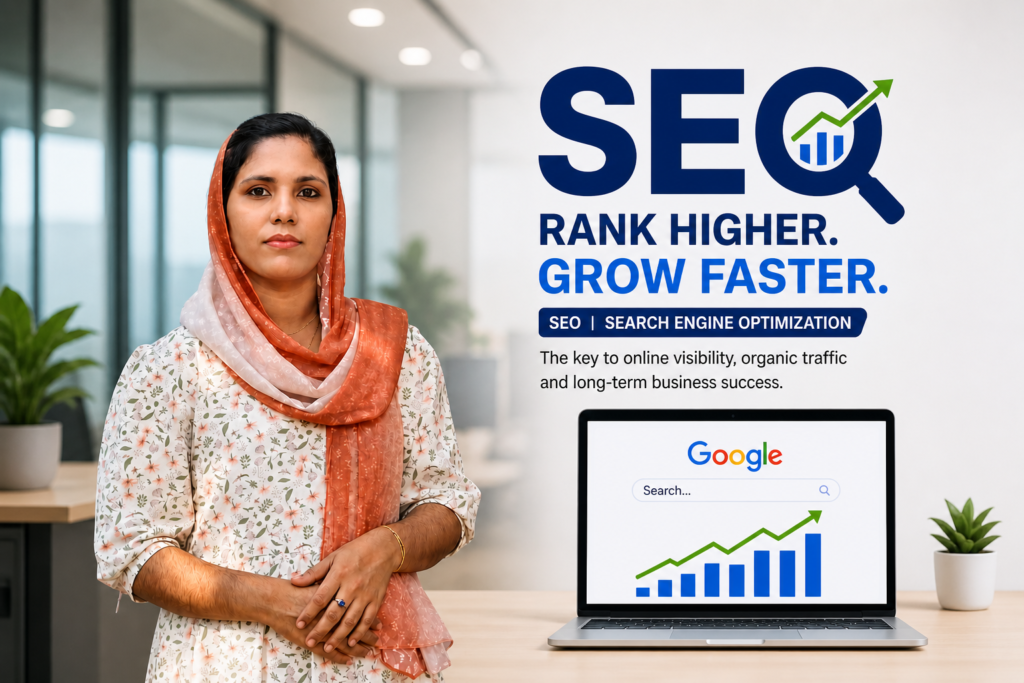
Powerful SEO Strategies for Widil: How to Rank Higher Online Why is SEO Essential in Today’s Digital World? In today’s competitive online market, simply having a website is not enough. Businesses must ensure their websites appear in front of the right audience when people search online. This is where search engine optimization becomes important. For a platform like Widil, improving online visibility helps attract potential users, strengthen brand credibility, and increase customer engagement. When people search for services or solutions related to Widil, appearing on the first page of search engines can lead to more traffic, better engagement, and higher conversions. For example, if users search for digital solutions or business growth services, ranking higher on Google gives Widil a better opportunity to reach new customers. What is Search Engine Optimization? Search engine optimization, commonly known as SEO, is the process of improving a website’s visibility on platforms like Google, Bing, and Yahoo. The main goals include: Increasing organic website traffic Improving search rankings Building brand awareness Generating quality leads Boosting conversions Unlike paid advertising, organic optimization strategies help businesses gain long-term results naturally. Key Components of Website Optimization 1. Keyword Research Keyword research helps businesses understand what users search for online. Widil can target phrases such as: digital solutions platform business growth tools online business services digital business platform Using specific long-tail keywords helps attract a more targeted audience. 2. On-Page Optimization On-page optimization improves individual web pages for better user experience and search visibility. This includes: Optimized page titles Meta descriptions Proper heading structure (H1, H2, H3) Image alt text Internal linking Clean URL structures Example:widil.com/seo-guide A structured website makes navigation easier for both users and search engines. 3. Content Marketing High-quality content plays a major role in online growth. Widil can publish: Blog articles Tutorials Guides Industry insights Case studies Regular publishing helps build authority and improve keyword reach. 4. Technical Optimization Technical improvements ensure that a website performs efficiently. Important factors include: Fast loading speed Mobile responsiveness Secure HTTPS connection XML sitemap Structured data Fixing crawl issues Search engines prefer websites that are secure, fast, and user-friendly. 5. Backlink Building Backlinks are links from other websites pointing toward Widil. They help improve website authority and search ranking performance. Widil can gain quality backlinks through: Guest posting PR campaigns Partnerships Shareable resources and content Strong backlinks improve trust and credibility online. How Can Widil Rank Higher Online? Widil can strengthen its digital presence through a strategic optimization plan. Step 1: Create a Strong Keyword Strategy Identify the terms your target audience frequently searches for. Step 2: Publish Valuable Content Regularly Consistent blog publishing helps improve visibility and engagement. Step 3: Improve Website Performance Enhance page speed, mobile experience, and technical health. Step 4: Increase Website Authority Build backlinks and improve brand mentions across the web. Step 5: Monitor and Improve Results Use tools like Google Analytics and Google Search Console to track: Organic traffic Search rankings Bounce rate Conversion rate Benefits for Widil Implementing a strong optimization strategy can help Widil achieve: Higher search rankings Increased website traffic Better brand awareness More qualified leads Improved conversion opportunities Long-term digital growth Organic growth strategies are both sustainable and cost-effective. Conclusion In today’s highly competitive digital environment, online visibility is essential for business growth. For Widil, investing in website optimization means reaching the right audience, improving brand presence, and creating long-term growth opportunities. With quality content, technical improvements, keyword planning, and authority building, Widil can establish a strong position in search engine results. To grow online, Widil needs visibility — and smart optimization is the key to achieving it. CONNECT ME REACH OUT

photo 6321165732355446382 y
Uncategorized

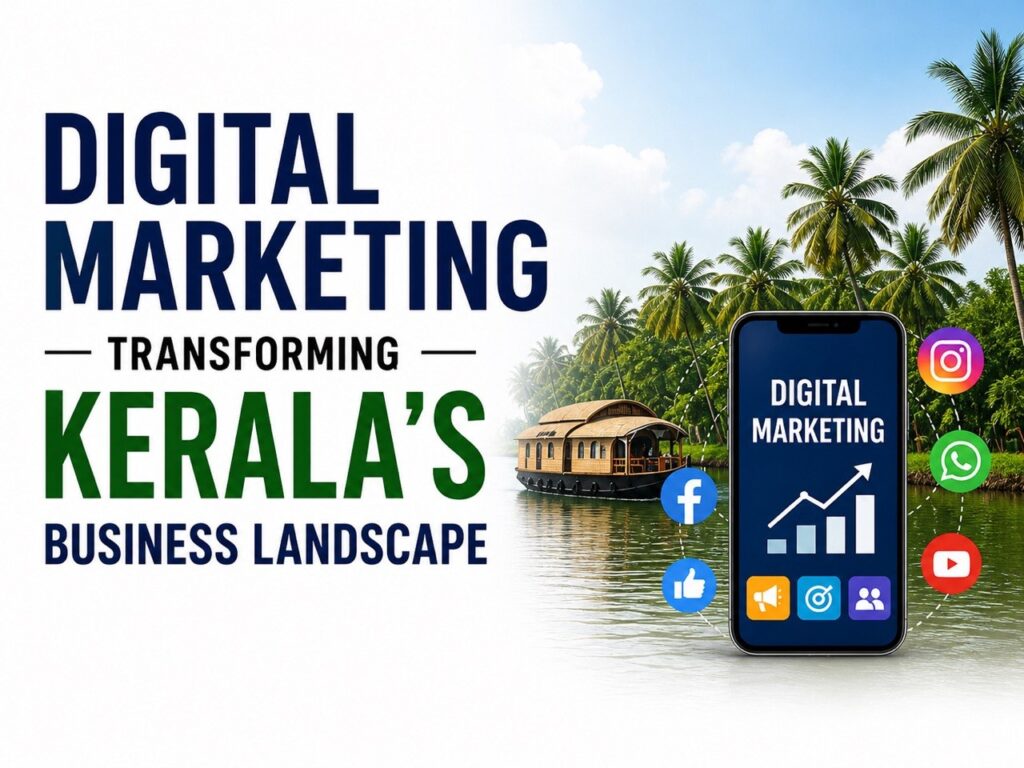
The Impact of Digital Marketing on Kerala’s Business Landscape

In today’s fast-paced Business world, digital marketing has become an essential part of growth and development. Especially in Kerala, there has been a major shift from traditional marketing methods to digital platforms, transforming how companies operate and connect with customers. 1. Business Opportunities for Small Enterprises Earlier, small enterprises had limited reach. But now: Social media platforms have increased brand awareness Even local shops can reach a global audience Promotion is possible at a lower cost 2. Customer Reach and Targeting With digital marketing tools: Companies can target specific audiences Customer behavior can be analyzed Personalized marketing strategies can be applied 3. Business Growth Through Social Media Influence Platforms like Facebook and Instagram: Help brands connect directly with customers Influencer marketing has become highly popular in Kerala Build trust and brand credibility 4. Growth of E-commerce in Kerala Due to digital marketing: Online shopping has significantly increased in Kerala Local brands are selling through platforms like Amazon and Flipkart More websites and online stores are emerging 5. Business Data-Driven Decision Making Organizations now: Use analytics tools to track performance Measure ROI (Return on Investment) Make smarter and more effective strategies 6. Business Increase in Job Opportunities The digital marketing field has created new career paths such as: SEO Specialist Social Media Manager Content Creator PPC Expert This has significantly boosted employment opportunities in Kerala. 7. Business Support for Tourism Growth in Kerala Kerala is widely known for its tourism industry, and digital marketing has played a major role in promoting it globally. Travel agencies use social media and websites to attract tourists Online advertisements help showcase Kerala’s culture and destinations Digital campaigns increase international visibility and bookings 8. Business Communication and Customer Engagement Digital platforms allow brands to communicate with customers more effectively. Customers can interact directly through comments and messages Faster responses improve customer satisfaction Regular engagement helps build long-term customer relationships 9. Business Growth of Digital Payment and Online Services The rise of digital marketing has also encouraged online services and digital payments. More companies now offer online booking and payment options Customers prefer convenient digital transactions Kerala’s startup ecosystem is growing through digital innovation 10. Business Brand Visibility Through Content Marketing Content marketing has become an effective strategy for companies in Kerala to build brand identity. Blogs, videos, and social media posts attract more customers Quality content improves online visibility and engagement Brands can establish authority and customer trust 11. Business Support for Startups and Entrepreneurs Digital marketing has opened new opportunities for startups and young entrepreneurs in Kerala. Startups can promote products with minimal investment Online platforms help ventures grow faster Entrepreneurs can compete with larger brands effectively 12. Business Mobile Marketing and Smartphone Usage The increasing use of smartphones has made digital marketing more powerful. Companies can reach customers anytime through mobile ads Apps and mobile-friendly websites improve user experience WhatsApp marketing has become popular among local shops 13. Business Competitive Advantage in the Market Organizations using digital marketing gain a stronger position in the competitive market. Companies can quickly adapt to changing customer trends Online presence helps brands stay ahead of competitors Digital strategies improve customer loyalty and sales growth 14. Business Benefits for Educational Institutions Educational institutions in Kerala are also benefiting from digital marketing strategies. Colleges and training centers promote courses through social media Online campaigns attract students from different regions Digital platforms improve communication between institutions and students 15. Business Importance of Video Marketing Video content has become one of the most powerful digital marketing tools. Brands use short videos and reels to engage audiences Product demonstrations increase customer interest Video marketing improves brand reach and online engagement 16. Business Customer Reviews and Buying Decisions Online reviews and ratings now play a major role in consumer behavior. Positive reviews build trust among customers Companies can improve services based on customer feedback Review platforms help customers make informed decisions 17. Business Future Scope of Artificial Intelligence in Digital Marketing Artificial Intelligence (AI) is shaping the future of digital marketing in Kerala. AI tools help automate marketing activities Chatbots improve customer support and response time Companies can predict customer preferences more accurately Conclusion Digital marketing has completely transformed the commercial landscape of Kerala. In today’s competitive world, having a strong digital presence is no longer optional; it is essential. The importance of digital marketing will continue to grow in the future. CONNECT ME REACH OUT

Personal Branding
Uncategorized

Personal Branding: Why It Matters in the Digital Age

Personal Branding: Why It Matters in the Digital Age In today’s competitive world, having skills alone is no longer enough. Whether you are a student, entrepreneur, freelancer, or working professional, how people perceive you matters. This is where personal branding becomes important. Personal branding is the process of creating and managing your professional identity. It is how you present yourself to the world and how others remember you. In the digital era, where people search online before making professional decisions, your personal brand can strongly influence how others view your credibility and expertise. A strong personal brand helps you create a lasting impression. It allows people to understand your skills, personality, values, and professional strengths. Whether you are applying for a job, building a business, or growing as a freelancer, your personal brand acts like your digital reputation. What is Personal Branding? Personal branding is the intentional effort to shape your reputation, values, expertise, and personality in a way that makes you recognizable and trustworthy. Simply put, your personal brand is the answer to this question: “What do people think of when they hear your name?” It includes: Your skills and expertise Your communication style Your online presence Your values and personality The content you share Your professional achievements The way you interact with people Personal branding is not only about being popular online. It is about building trust, authority, and authenticity in your field. Why is Personal Branding Important? 1. Builds Trust and Credibility People are more likely to connect with and trust individuals who consistently show expertise and authenticity. When you regularly share valuable insights and maintain professionalism, people begin to see you as reliable and knowledgeable. Trust is one of the most powerful assets in any career or business. A strong personal brand helps people feel confident about working with you. 2. Creates Career Opportunities A strong personal brand can attract: Job opportunities Freelance clients Business partnerships Speaking engagements Collaborations Networking opportunities Recruiters and clients often search online before making decisions. A professional online presence can create opportunities even without directly applying for them. 3. Helps You Stand Out In a crowded market, many people may have similar qualifications and skills. Personal branding helps differentiate you from others. Your unique experiences, personality, communication style, and perspective make your brand different. People remember professionals who clearly communicate their value. 4. Expands Your Network When people know what you stand for, like-minded professionals are more likely to connect with you. A strong brand attracts individuals who share similar goals, interests, and professional values. This can help you build meaningful relationships and collaborations. 5. Increases Confidence and Self-Awareness Building a personal brand also helps you better understand your strengths, goals, and professional identity. It encourages self-improvement and confidence in your abilities. Key Elements of Personal Branding 1. Define Your Niche Identify what you want to be known for. Examples: Digital Marketing Graphic Design AI & Technology Finance Entrepreneurship Content Creation Business Coaching Choosing a niche helps people clearly understand your expertise. 2. Build an Online Presence Create professional profiles on platforms like: LinkedIn Instagram Twitter/X YouTube Personal website or portfolio Your online presence should reflect professionalism, consistency, and clarity. Tips for Building a Strong Online Presence: Use a professional profile picture Write a clear bio Showcase your skills and achievements Share valuable content regularly Keep your profiles updated 3. Share Valuable Content Posting useful content helps establish authority and trust. Examples: Industry insights Tips and tutorials Personal experiences Case studies Success stories Educational videos Productivity tips Content sharing demonstrates your expertise and keeps your audience engaged. Why Content Matters When you consistently share value, people begin to recognize you as an expert in your field. Over time, this builds credibility and visibility. 4. Be Consistent Consistency in messaging, visuals, communication, and content builds recognition. If your audience sees consistent values and quality content from you, they are more likely to remember and trust you. Consistency includes: Posting regularly Maintaining similar communication style Using consistent visual identity Staying aligned with your niche 5. Network Strategically Engage with professionals in your field through: Comments Collaborations Events Webinars Online communities Networking is not only about meeting people. It is about building genuine relationships and providing value to others. The Importance of Authenticity Authenticity plays a major role in building a successful personal brand. People appreciate individuals who are genuine and transparent about their journey. Sharing real experiences, lessons, failures, and achievements can make your brand more relatable and trustworthy. Instead of trying to imitate others, focus on highlighting your unique strengths and personality. Authenticity creates stronger emotional connections with your audience. People follow personalities they can relate to, not perfect images. Personal Branding Through Social Media Social media platforms have become powerful tools for personal branding in the digital era. By regularly sharing meaningful content, interacting with your audience, and showcasing your expertise, you can build a strong professional image online. Platforms like LinkedIn, Instagram, YouTube, and Twitter/X help individuals: Reach wider audiences Build authority Connect with professionals Share knowledge Grow communities Tips for Social Media Branding Focus on quality over quantity Engage with your audience Use professional visuals Stay active consistently Share educational and inspiring content Long-Term Impact of Personal Branding A strong personal brand creates long-term benefits beyond immediate career opportunities. Over time, it helps: Establish authority Increase visibility Build a lasting reputation Attract opportunities automatically Create business growth Build leadership influence Consistent personal branding can also open doors to leadership roles, partnerships, and business opportunities that contribute to long-term success. Your personal brand becomes a valuable professional asset that continues to grow with time. Common Personal Branding Mistakes ❌ Trying to impress everyone❌ Inconsistent online presence❌ Copying others completely❌ Sharing content without value❌ Ignoring audience engagement❌ Posting without clear goals❌ Being inactive for long periods Avoiding these mistakes helps maintain professionalism and audience trust. How to Start Building Your Personal Brand Step 1: Identify Your Strengths Understand your skills, interests, and expertise. Step 2: Clarify Your Goals Decide what

AI
Uncategorized

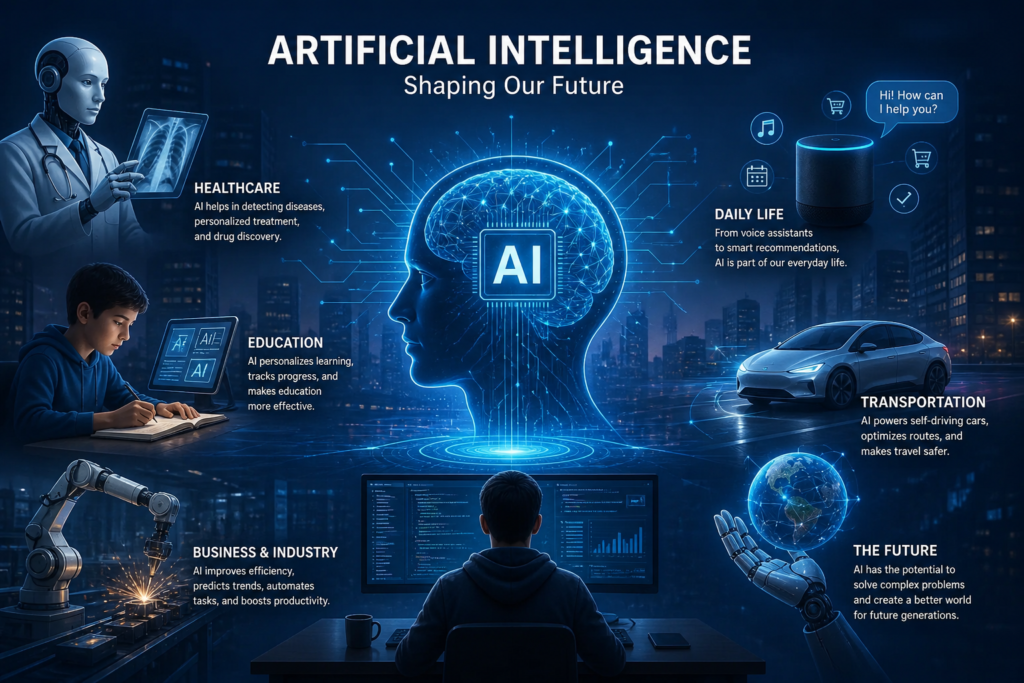
Artificial Intelligence (AI): The Technology Shaping Our Future

Artificial Intelligence: Transforming the Future of Technology In today’s digital world, one of the most talked-about technologies is Artificial Intelligence . From smartphones to self-driving cars, Artificial Intelligence is becoming a major part of our daily lives. Businesses, educational institutions, healthcare systems, and even entertainment platforms are increasingly using Artificial Intelligence to improve efficiency and deliver better experiences. Artificial Intelligence is transforming the way people work, communicate, learn, and solve problems. Tasks that once required human effort can now be automated using intelligent systems. As technology continues to evolve, Artificial Intelligence is expected to become even more integrated into everyday life.  Artificial Intelligence is not just a futuristic concept anymore. It is already influencing how we search online, shop on e-commerce platforms, interact with social media, and use digital services. Understanding Artificial Intelligencehas become important for students, professionals, entrepreneurs, and businesses alike. What is Artificial Intelligence? Artificial Intelligence refers to machines or software systems that can perform tasks that usually require human intelligence. These tasks include: Learning from data Solving problems Making decisions Understanding language Recognizing images and patterns Predicting outcomes Automating repetitive tasks In simple terms, Artificial Intelligence  enables machines to think, learn, and act in ways similar to humans. Artificial Intelligence systems are designed to analyze large amounts of data, identify patterns, and improve their performance over time. Unlike traditional software, Artificial Intelligence can learn from experience and adapt to new information. Examples of AI in Daily Life Many people use Artificial Intelligence every day without even realizing it. Examples include: Virtual assistants like Siri, Alexa, and Google Assistant Netflix and YouTube recommendations Chatbots like ChatGPT Face recognition systems Self-driving vehicles Smart home devices Online shopping recommendations Spam email filters Navigation apps like Google Maps These technologies use Artificial Intelligence algorithms to improve user experience and provide personalized services. How Does|Work? Artificial Intelligence mainly works through a concept called Machine Learning (ML). Machine learning allows computers to learn from large amounts of data without being explicitly programmed for every task. For example, if an Artificial Intelligence system is trained using thousands of images of cats and dogs, it can later identify whether a new image is a cat or a dog. The more data an Artificial Intelligence system receives, the more accurate and intelligent it becomes. Key Technologies Behind AI 1. Machine Learning (ML) Machine Learning allows systems to learn from data and improve automatically without human intervention. Examples: Recommendation systems Fraud detection Predictive analytics 2. Deep Learning Deep Learning is a more advanced form of machine learning that uses neural networks inspired by the human brain. It is used in: Image recognition Speech recognition Autonomous vehicles Medical diagnosis 3. Natural Language Processing (NLP) NLP helps machines understand and process human language. Examples include: Voice assistants Translation apps Chatbots Speech-to-text systems 4. Computer Vision Computer Vision enables machines to understand and analyze images and videos. Applications include: Facial recognition Medical imaging Security surveillance Self-driving cars Types of Artificial Intelligence AI can be categorized into different types based on capabilities. 1. Narrow AI Narrow AI is designed to perform a specific task. Examples: Google Assistant Netflix recommendations Face recognition systems Most AI systems used today are Narrow AI. 2. General AI General AI refers to machines that can perform any intellectual task similar to humans. This type of AI is still under development and does not yet fully exist. 3. Super AI Super AI is a theoretical concept where machines become more intelligent than humans. It remains a topic of research and debate. Applications of AI 1. Healthcare AI helps doctors diagnose diseases faster and more accurately. It is used in: Medical imaging Drug discovery Robotic surgeries Patient monitoring Predictive healthcare analytics AI can improve treatment efficiency and reduce medical errors. 2. Education AI-powered learning platforms provide personalized education experiences based on students’ learning speed and preferences. Examples: Smart learning apps Automated grading systems Virtual tutors Language learning platforms AI makes education more accessible and interactive. 3. Business Businesses use AI for: Customer support Marketing automation Fraud detection Data analysis Inventory management Sales forecasting AI helps companies make faster and smarter business decisions. 4. Entertainment Streaming platforms use AI to recommend movies, songs, and videos based on user preferences. AI is also used in: Gaming Video editing Music generation Social media algorithms 5. Transportation AI is the driving force behind: Autonomous vehicles Traffic prediction Route optimization Smart transportation systems AI can improve road safety and reduce travel time. 6. Finance Banks and financial institutions use AI for: Fraud detection Credit scoring Risk analysis Automated trading Customer service chatbots AI improves security and financial decision-making. Benefits of AI AI offers several advantages across industries and daily life. ✅ Faster Task Completion AI systems can process information and complete tasks much faster than humans. ✅ Reduced Human Error Automation reduces mistakes in repetitive and data-heavy tasks. ✅ 24/7 Availability AI-powered systems can work continuously without breaks. ✅ Better Data Analysis AI can analyze massive amounts of data quickly and accurately. ✅ Increased Productivity Businesses can improve efficiency and save time using AI-powered tools. ✅ Improved Customer Experience AI enables personalized recommendations and faster customer support. Challenges of AI Despite its benefits, AI also comes with challenges and concerns. ❌ Job Displacement Automation may replace certain repetitive jobs, creating employment challenges. ❌ Privacy Concerns AI systems collect and analyze large amounts of user data, raising privacy issues. ❌ Bias in AI Systems AI can sometimes produce biased results if trained on biased data. ❌ Ethical and Security Issues There are concerns regarding misuse of AI, cybersecurity threats, and ethical decision-making. ❌ Dependence on Technology Overdependence on AI may reduce human involvement in critical decision-making. The Future of AI AI is expected to play an even bigger role in the future. Industries such as healthcare, finance, education, agriculture, and manufacturing are rapidly adopting AI technologies. Future developments may include: Smarter virtual assistants Advanced robotics AI-powered healthcare systems Fully autonomous transportation Intelligent smart cities AI is also expected to create new career opportunities in

ChatGPT Image Apr 30 2026 02 42 05 PM 1
Uncategorized

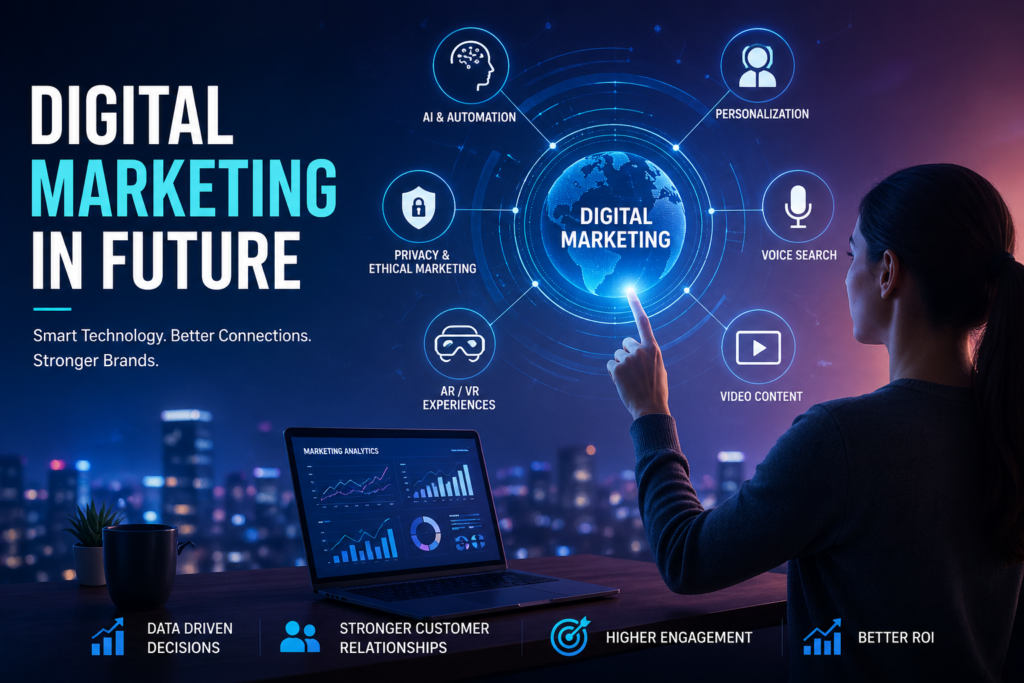
Digital Marketing in Future

Digital marketing is evolving faster than ever before. With technology advancing rapidly, businesses must adapt to new trends and strategies to stay competitive. The future of digital marketing will be shaped by artificial intelligence, automation, personalization, voice search, and immersive technologies. 1. Artificial Intelligence Will Lead Marketing Strategies Artificial Intelligence (AI) is already transforming digital marketing. In the future, AI will become even more powerful in analyzing customer behavior, predicting trends, and automating campaigns. Chatbots, AI-powered content creation, and predictive analytics will help businesses deliver faster and smarter customer experiences. 2. Hyper-Personalization Will Become Standard Customers no longer respond well to generic advertisements. Future digital marketing will focus heavily on personalized content, product recommendations, and targeted communication based on user interests, browsing behavior, and purchase history. For example, websites and apps will automatically show different products, offers, or content depending on each visitor’s preferences. 3. Voice Search Optimization Will Be Essential As smart devices like Alexa, Siri, and Google Assistant continue growing, voice search will become a major part of online discovery. Businesses will need to optimize content for conversational keywords and question-based searches. Instead of typing “best marketing agency,” users may ask, “Which is the best digital marketing agency near me?” 4. Video Content Will Dominate Short-form videos, live streaming, and interactive video content will continue dominating platforms like YouTube, Instagram, TikTok, and LinkedIn. Brands that invest in creative video storytelling will have stronger engagement and higher conversion rates. Video will not just entertain—it will educate, build trust, and drive sales. 5. Augmented Reality (AR) and Virtual Reality (VR) Marketing Future customers will expect immersive experiences. AR and VR will allow users to virtually try products, explore stores, or experience services before making purchases. For example, fashion brands may let customers “try on” clothes virtually using mobile apps. 6. Privacy and Ethical Marketing Will Matter More As users become more aware of data privacy, businesses must prioritize transparency and ethical marketing practices. First-party data, permission-based marketing, and secure customer relationships will become increasingly important. Conclusion The future of digital marketing is exciting, data-driven, and customer-focused. Businesses that embrace AI, personalization, video content, voice search, and ethical practices will gain a competitive advantage. Digital marketing is no longer just about selling products—it is about creating meaningful and seamless customer experiences. The future belongs to brands that innovate today.

Scroll to Top